
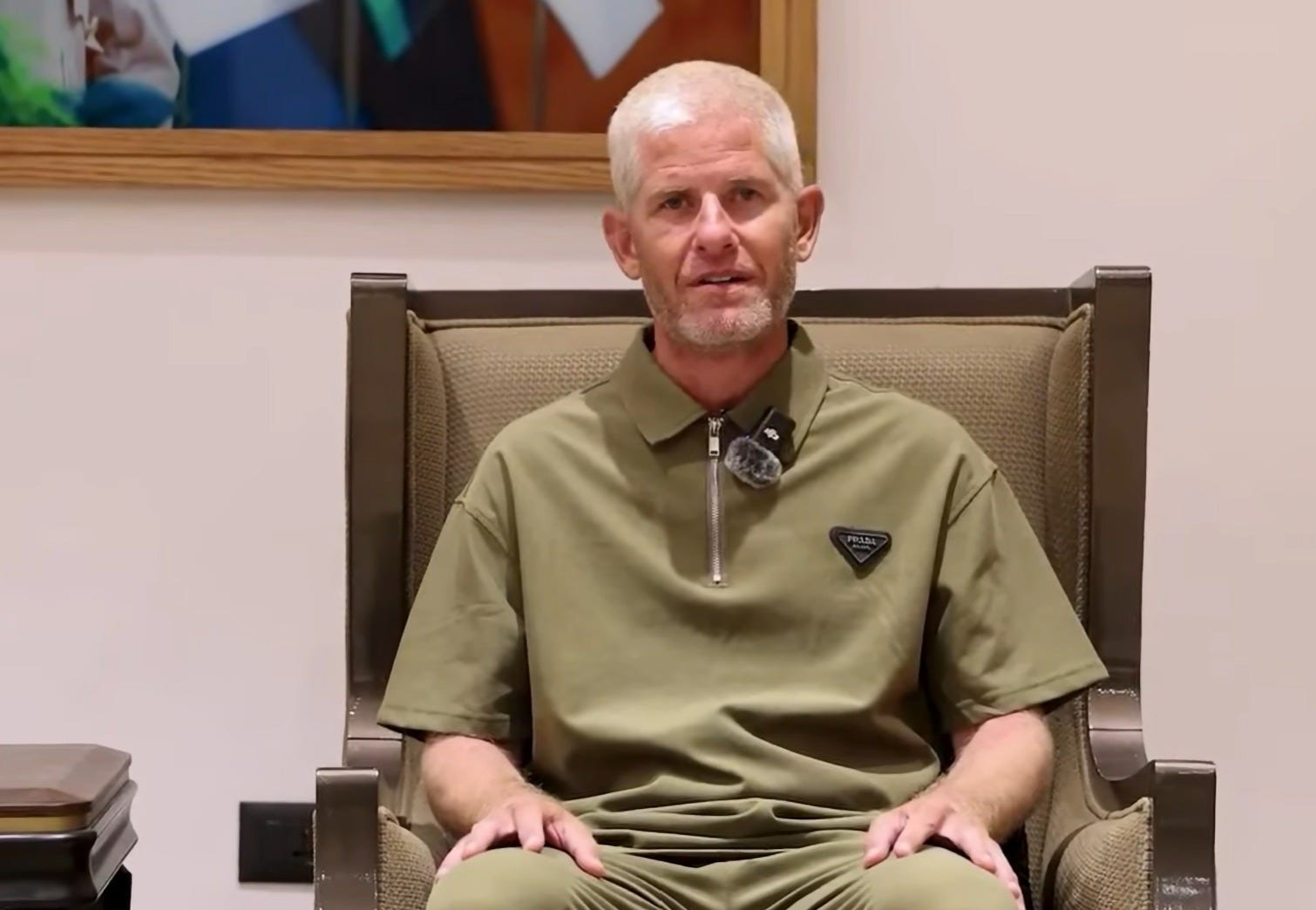
The recent release of American missionary pilot Kevin Rideout has renewed attention on the safety of humanitarian and faith-based personnel serving in conflict-affected regions. Rideout, a pilot with SIM International, was abducted in Niger’s capital, Niamey, in October 2025 and released after more than nine months in captivity. While the circumstances of his release remain unclear, his case illustrates a reality that missionary organizations have faced for years: personnel may operate in environments where armed groups, kidnapping networks, political instability, and weak local institutions can rapidly change the risk picture.
For missionary-sending agencies and individual goers, this is not an argument against service in difficult places. It is an argument for stewardship. Faithful deployment requires more than a calling, a travel itinerary, and a general awareness of danger. It requires a realistic understanding of the social, political, security, and information environments in which teams will live and work.
The threat is real, but complex
Across the Sahel, parts of Central Africa, and other conflict-affected regions, kidnapping for ransom, armed violence, criminal extortion, and militant activity pose serious risks to civilians, aid workers, and religious personnel. In Niger, Mali, and Burkina Faso, groups affiliated with Jama’at Nusrat al-Islam wal-Muslimin (JNIM) and Islamic State branches have demonstrated the ability to operate across borders and target both local populations and foreign nationals.
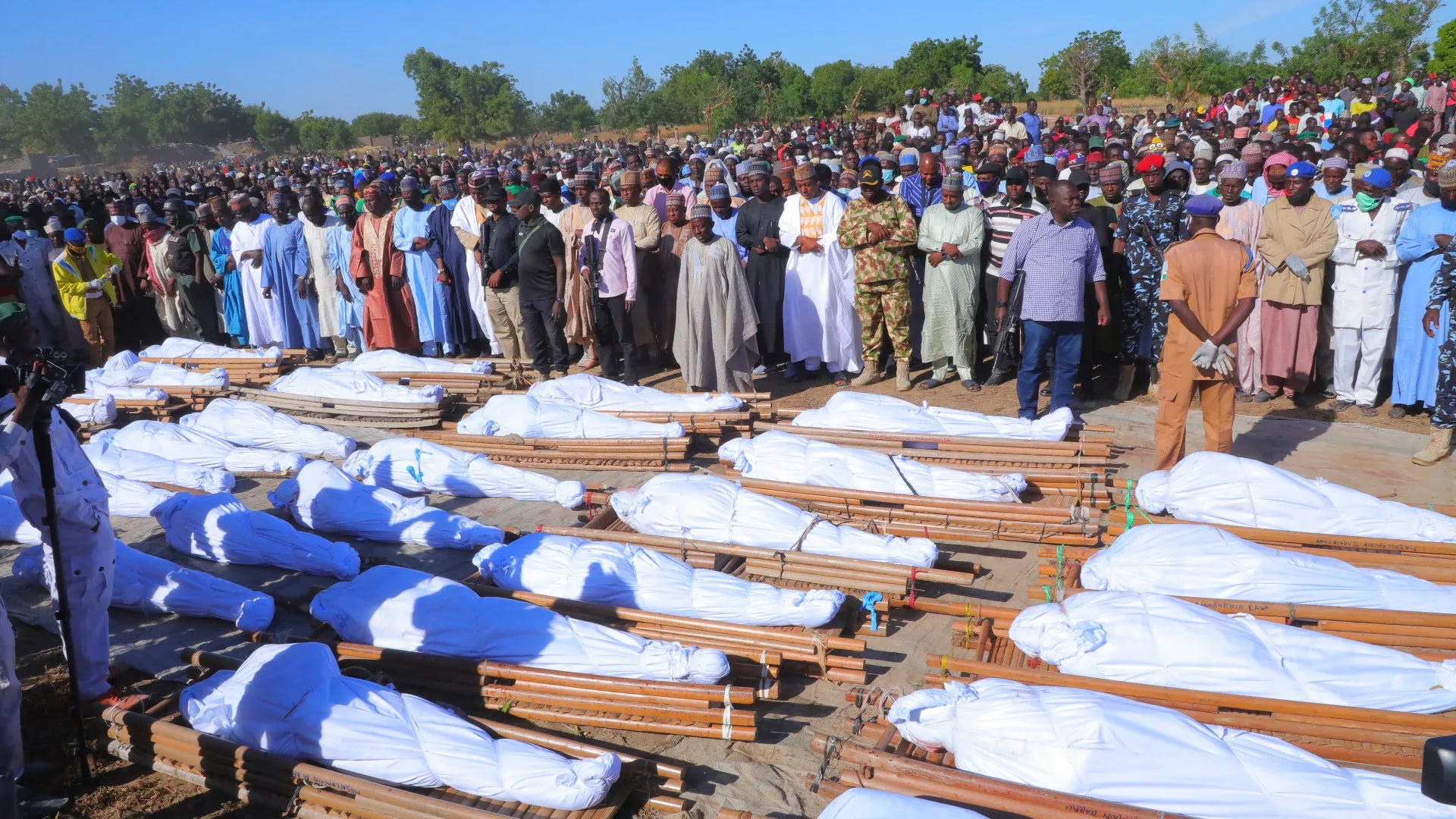
Christian communities can face specific threats in some settings, particularly where jihadist actors, local militias, or criminal networks exploit religious identity. However, responsible risk analysis must avoid treating every violent incident as exclusively religious in motive. In Nigeria, for example, ACLED documented a rise in violence targeting Christians, but also found that this occurred within a broader increase in violence against civilians, shaped by armed-group competition, ethnicity, local grievances, banditry, and territorial disputes. For mission leaders, the practical lesson is clear: assess threats at the local level, identify who has the capability and intent to cause harm, and understand the conditions that make a team visible or vulnerable.
Why duty of care matters
No security process can eliminate risk. Those called to serve in difficult environments understand that ministry may involve sacrifice. Yet faith-based organizations have a responsibility to prepare personnel, make informed decisions, and reduce foreseeable harm wherever possible.
A kidnapping, assault, evacuation, or loss of life can affect far more than the individual involved. It can place families under severe emotional strain, consume limited organizational resources, disrupt ministry partners, endanger local staff, damage trust with communities, and compromise the continuity of future work. Criminal actors may also use extortion, intimidation, disinformation, surveillance, and coercion before a crisis becomes visible.
Strong duty of care therefore begins well before deployment. It should include:
Country and subnational threat assessments.
Local-partner due diligence and reference checks.
Security and communications protocols tailored to the operating environment.
Medical, evacuation, insurance, and crisis-management planning.
Hostile-environment awareness appropriate to the mission and location.
Information-verification procedures to reduce exposure to rumors, manipulation, and disinformation.
Clear decisions about movement, lodging, public visibility, digital security, and emergency communications.
Build a layered intelligence picture
Open-source intelligence, or OSINT, should be a continuing part of deployment planning rather than a one-time pre-travel task. Local and regional news, trusted community contacts, embassy alerts, conflict-event data, travel insurance providers, and carefully vetted social-media reporting can provide early indications of demonstrations, road closures, armed-group activity, kidnappings, or sudden political developments.
Open sources must be cross-checked. Platforms such as X, Facebook, WhatsApp, GroupMe, WeChat, LiveUA and local messaging channels can surface useful information quickly, but they can also amplify false claims, outdated reports, or deliberate disinformation. Teams should verify critical reporting across multiple credible sources before changing movements or making operational decisions.
Government resources also remain essential. The U.S. Department of State’s travel advisories, embassy security messages, the Overseas Security Advisory Council, or OSAC, and CDC travel-health guidance should form part of every deployment package. These resources should be supplemented by relevant local authorities, trusted in-country partners, medical providers, insurers, and evacuation-support services.
Organizations may also benefit from conflict and political-risk data providers and research organizations, including ACLED, the Armed Conflict Location & Event Data Project; the International Crisis Group; the Uppsala Conflict Data Program; CSIS; and other specialized regional sources. No single product provides a complete picture. Effective duty of care depends on combining security reporting with local knowledge, organizational experience, and a clear understanding of mission objectives.
What UnseenFront adds
UnseenFront strengthens this process by examining risks that conventional travel advisories and conflict data may not fully capture. Security conditions are shaped not only by armed violence, but also by corruption, institutional weakness, manipulation of information, family and community structures, coercion, religious conditions, and the ability of local authorities to protect vulnerable people.
The UnseenFront Moral Disorder Index, or MDI, gives mission leaders a structured framework for evaluating these conditions. It examines pressures involving governance, information integrity, bodily safety, family stability, coercion, faith conditions, and social order. Used alongside conventional security intelligence, the MDI helps organizations identify the underlying conditions that may affect how personnel are received, protected, informed, and sustained.
This matters across East and Central Africa (see figure 1.0). Kenya’s MDI profile emphasizes institutional corruption and information disorder while indicating comparatively resilient family structures. Uganda combines serious authority disorder with greater family-related strain. The Democratic Republic of the Congo presents the most difficult convergence of governance failure, conflict-linked insecurity, information manipulation, and elevated bodily risk. A single country-risk label cannot capture these distinctions.
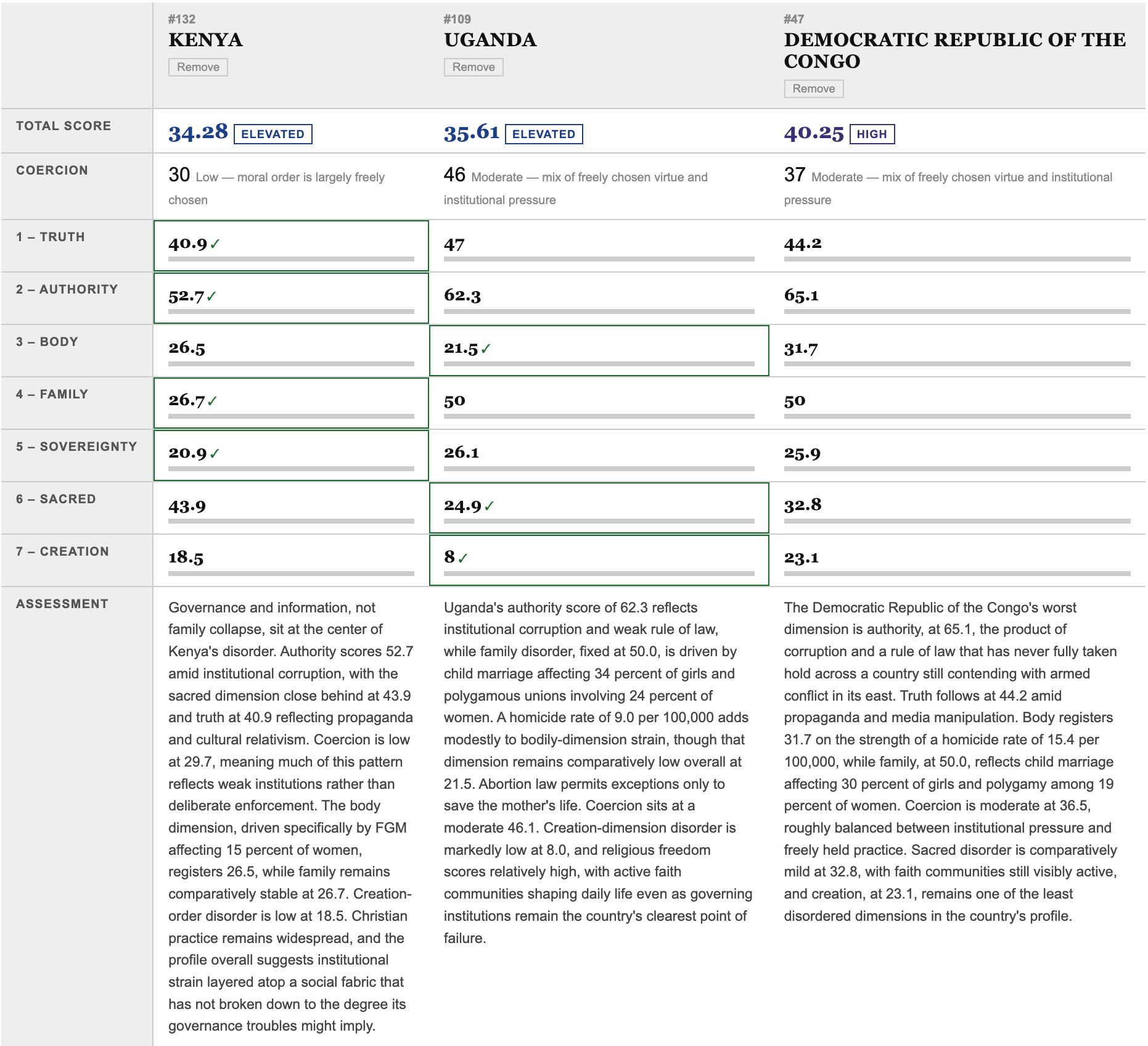
For mission organizations, this type of analysis can inform practical decisions before and during deployment. In Kenya, planning may place greater emphasis on corruption exposure, local due diligence, and information verification. In Uganda, teams may need to account for governance friction and social vulnerabilities affecting families and communities. In the DRC, duty of care should prioritize conflict awareness, movement planning, trusted local networks, communications resilience, and robust contingency procedures.
UnseenFront is not a substitute for government advisories, security professionals, local partners, or organizational leadership. It is an analytical partner that helps missionary and humanitarian organizations integrate moral, social, governance, and security conditions into a more complete duty-of-care framework. The goal is not to eliminate missions in difficult places. It is to help leaders protect personnel, preserve scarce resources, strengthen local trust, and make deployment decisions with greater prudence and clarity.
Before deployment, organizations need more than broad travel warnings. UnseenFront combines real-time, on-the-ground information, the Moral Disorder Index (MDI) framework, and an experienced analytical team to help missionary and humanitarian organizations assess risk, prepare personnel, and make informed decisions throughout the deployment lifecycle. Our analysis brings together security conditions with the governance, information, social, and faith dynamics that shape local operating environments. For ongoing situational awareness, the UnseenFront Dispatch delivers primary-sourced moral intelligence on global disorder, helping leaders track emerging developments, sharpen planning assumptions, and better steward the people and missions entrusted to them.
Learn More
For more information on preparing your team for deployment or using UnseenFront’s duty-of-care, risk-analysis, and intelligence services, visit UnseenFront or contact the author at josh@unseenfront.com. We offer free introductory consultations for missionary and humanitarian organizations seeking support for safer, better-informed deployments.
About the Author
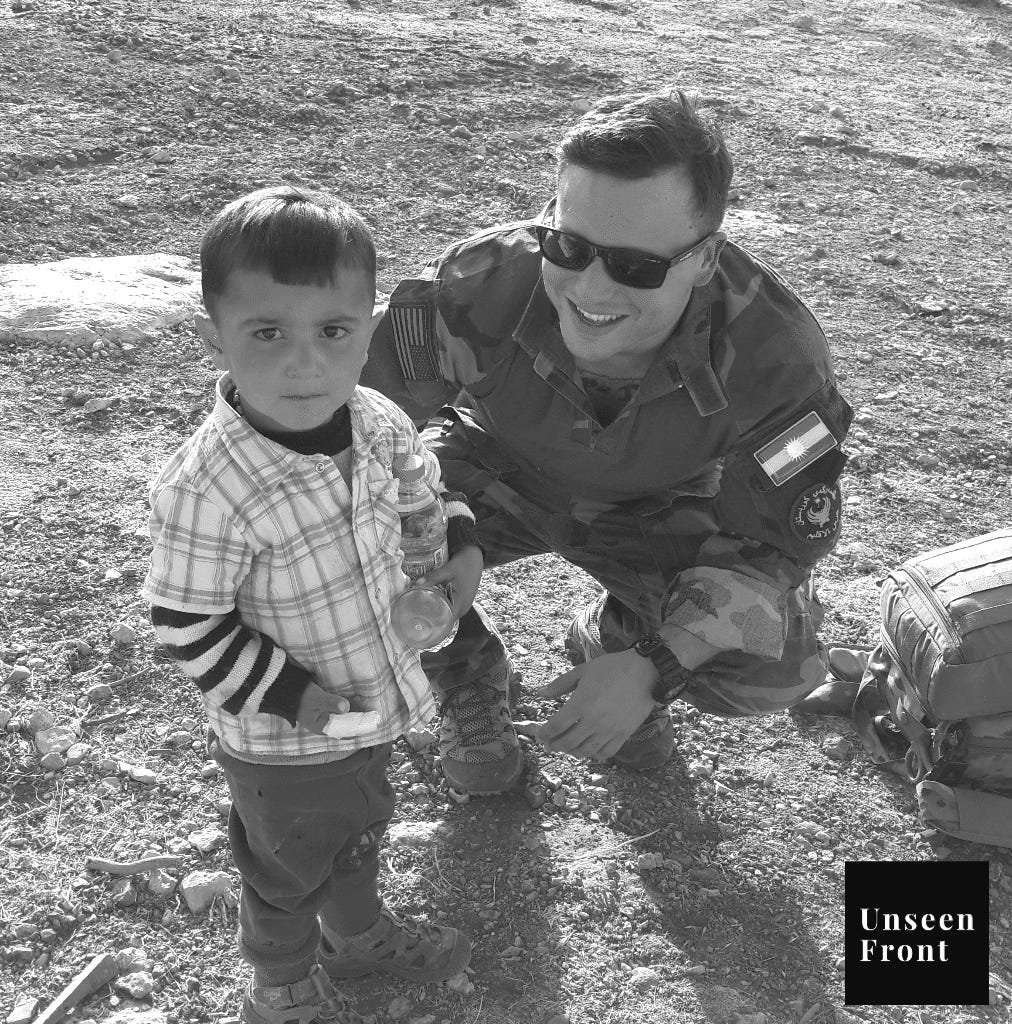
Joshua Perez is a national-security and policy professional with 16 years of experience in special operations, security consulting, and interagency environments. His work includes operational risk assessment, threat analysis, international coordination, medical support, and policy development across the Middle East, Indo-Pacific, and Europe. He has supported operations in high-threat environments, partnered with U.S. diplomatic and international counterparts, and led organizations focused on readiness, communications, and community support. Through UnseenFront, he applies this experience to help missionary, humanitarian, and other organizations better understand complex operating environments, strengthen duty-of-care planning, and make informed deployment decisions.